
The Soul-Calling of Ayurveda: More Than a Career, a Life Path.
There’s something unmistakably unique about those who feel drawn to study Ayurveda. They are not merely selecting a course from a university catalogue or ticking off a professional development box. Instead, they are answering a quiet, yet persistent ‘inner voice’, something more akin to a soul-call than a career choice.
This pull toward Ayurveda is not random. It is purposeful. It arises from a deep place within, often in response to an inner yearning to understand life more fully, to heal at the root level, and to live in a way that is aligned with the true rhythms of nature and the human spirit. For the genuine Ayurveda student, this is not just about knowledge acquisition—it’s about transformation.
Ayurveda is one of the world’s oldest and most comprehensive systems of healing, with roots that stretch back thousands of years. But more than its age or historical legacy, what makes Ayurveda so powerful is its timeless relevance. It speaks to the whole human being—body, mind, and soul—and offers guidance that is profoundly holistic, deeply intelligent, and enduringly effective.
A Path Chosen by the Heart
In today’s world, saturated with fast-paced digital content and ever-changing wellness trends, Ayurveda stands apart. It doesn’t clamour for attention through flashy headlines or social media soundbites. Its wisdom is quiet but profound, and its truth speaks to those who are truly listening.
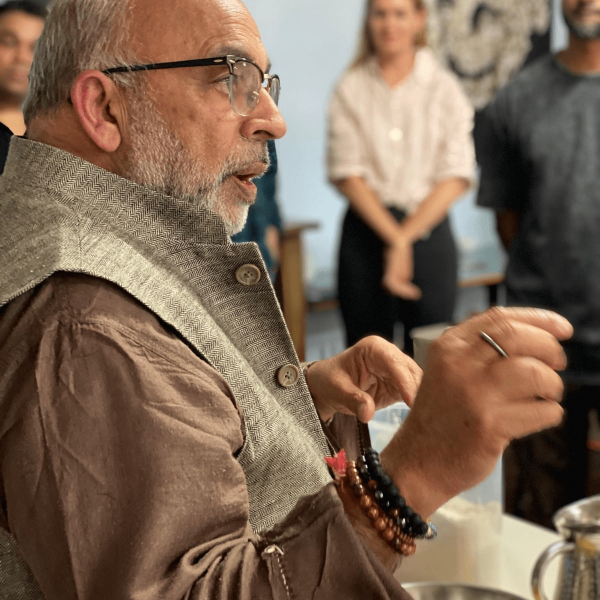
Prospective students who come to Ayurveda often do so with a sense of destiny. They may not fully understand why they are drawn to this path, but they feel it, nonetheless. Dr. Ajit (BAMS), the founder of the Australasian Institute of Ayurvedic Studies (AIAS), once said to his early students in Australia nearly 30 years ago:
“It is by no accident that you are all assembled here; this is a calling from the level of the soul. You have been brought here—whether you are fully aware of it or not—through a connection that runs deep, an urge in you that aspires to unfold this great potential.”
Those words still resonate today, perhaps more than ever.
A Commitment to Authenticity
While Ayurveda is gaining widespread popularity, there’s a crucial distinction between casual interest and committed study. The principles of Ayurveda are being increasingly referenced in wellness spaces and often in simplified or fragmented forms. You might hear about “doshas” in yoga classes, or see Ayurveda-inspired self-care products on store shelves. And while this exposure is helpful in raising awareness, it only scratches the surface. And that’s just a scratch.
To truly understand and practice Ayurveda—to become a genuine Ayurvedic Consultant—requires far more than passing familiarity. It demands dedication, curiosity, humility, and time. This is a field that cannot be condensed into a weekend workshop or an Instagram reel. It’s an immersive discipline, a science, and a spiritual journey all at once.
Walking the Path Before Guiding Others
One of the most profound truths in Ayurveda is that before you can help others heal, you must begin by applying the teachings in your own life. True Ayurvedic education requires more than intellectual understanding ……………..it asks for embodiment.
This means aligning your lifestyle with Ayurvedic principles: learning to live with the rhythms of nature, understanding your own constitution, and addressing imbalances with food, routine, herbs, and deeper spiritual inquiry. It also means embracing discipline and introspection and cultivating the inner clarity that allows you to guide others from a place of lived experience.
As a student, you’re not just learning theory; you’re becoming the living example of the knowledge you wish to share.
The Depth Behind the Qualification
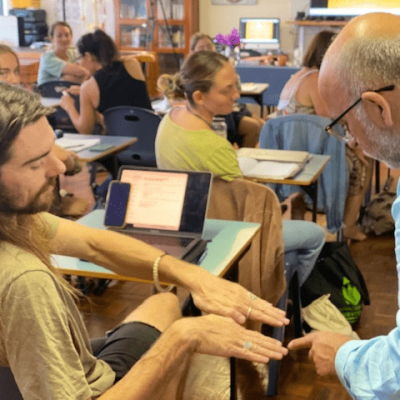
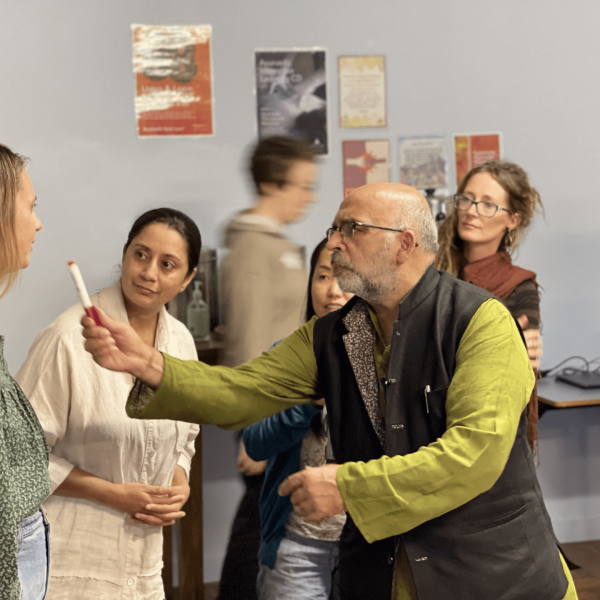
At AIAS, under the guidance of Dr. Ajit, students are offered a complete and authentic Ayurvedic education. This isn’t Ayurveda filtered through the lens of Western wellness culture or diluted by adjacent therapies. This is the real deal: classical Ayurvedic wisdom as it has been practiced for millennia, adapted respectfully to modern contexts while remaining rooted in its original intent.
While introductory insights into Ayurveda can be gained through yoga teacher training, naturopathy degrees, or short online courses, becoming a qualified Ayurvedic Consultant involves a far more structured and in-depth curriculum. It involves some years of study, including the mechanics of the system – it’s in-depth guiding principles, concepts of how the body and mind work, diagnostic techniques like Pulse Reading, and Therapies including Herbology, unique herbal Ayurvedic Bodywork techniques, and Ayurvedic Clinical Meditation, all taught within a framework that honours the sacredness of the tradition.
Not Just a Job—A Life of Purpose
It’s important to acknowledge that Ayurveda can indeed become a fulfilling profession. There is increasing demand for qualified consultants who can offer genuine support to people seeking holistic solutions for chronic conditions, lifestyle imbalances, and mental-emotional health.
However, financial gain is rarely the primary motivator for those who walk this path. The true Ayurveda student is inspired by something deeper: a longing to live a meaningful life, to make a positive difference, and to walk a path aligned with the ultimate goal of human existence: self-realization.
Ayurveda does not separate physical health from spiritual growth. In fact, it considers good health to be a foundation for self-knowledge. When we are balanced in body and mind, we can better connect with our inner truth and fulfill our higher potential. This is what makes the Ayurvedic path so deeply rewarding—it supports not just your livelihood, but your life’s purpose.
And then, to study Ayurveda as a career, you will need a Teacher, who themselves meets the requirements:
1. Authentic Training: They should have studied at a reputable institution or under a lineage-based teacher with strong grounding in classical Ayurvedic texts, Ayurvedic Pathology, Diagnosis, and Treatment.
2. Proper Qualifications: Ideally, they should hold a recognised degree such as a BAMS (Bachelor of Ayurvedic Medicine and Surgery), especially if you’re pursuing a formal or clinical path.
3. Clinical Experience: Ayurveda is deeply practical and personalized — theory alone isn’t enough. A teacher must have hands-on experience with a minimum of 10 years treating patients to offer meaningful, safe guidance.
4. Teaching Ability: It’s also vital that they can communicate these complex principles clearly and guide students based on their level — whether you’re a beginner or a medical professional looking to deepen your knowledge.
5. Involvement: You will need a teacher who is going to get involved with you and your learning, and be there to explain, clarify and answer all questions, and remove doubt.
If you’re looking to learn Ayurveda seriously, it’s wise to vet potential teachers or programs based on all five of these pillars.
Look into the AIAS and you will find that the AIAS has the Teacher, the staff, the learning materials, and decades of experience offering government recognised training qualifications in Ayurveda.
Are You Being Called?
If you feel a stir within you when you read these words, take a moment to honour it. That quiet pull toward something ancient and true is not coincidence. Perhaps you’ve felt it for some time – a persistent curiosity, a sense that there’s more to life than what’s been offered by modern systems. Maybe you’ve struggled with your own health or watched loved ones search in vain for lasting solutions. Or maybe you’re simply yearning for a life that feels more aligned with nature, purpose, and inner peace.
Whatever the reason, if you’re considering Ayurveda, know this: it is a path of both discipline and beauty, challenge and reward. And it is open to those with sincerity, humility, and the willingness to grow.
At AIAS, we welcome those who are ready to embark on this transformative journey—not just to learn Ayurveda, but to live it.
Because in the end, Ayurveda is not just a science. It is a way of life. A calling. And perhaps, your next great step toward becoming who you were always meant to be.